
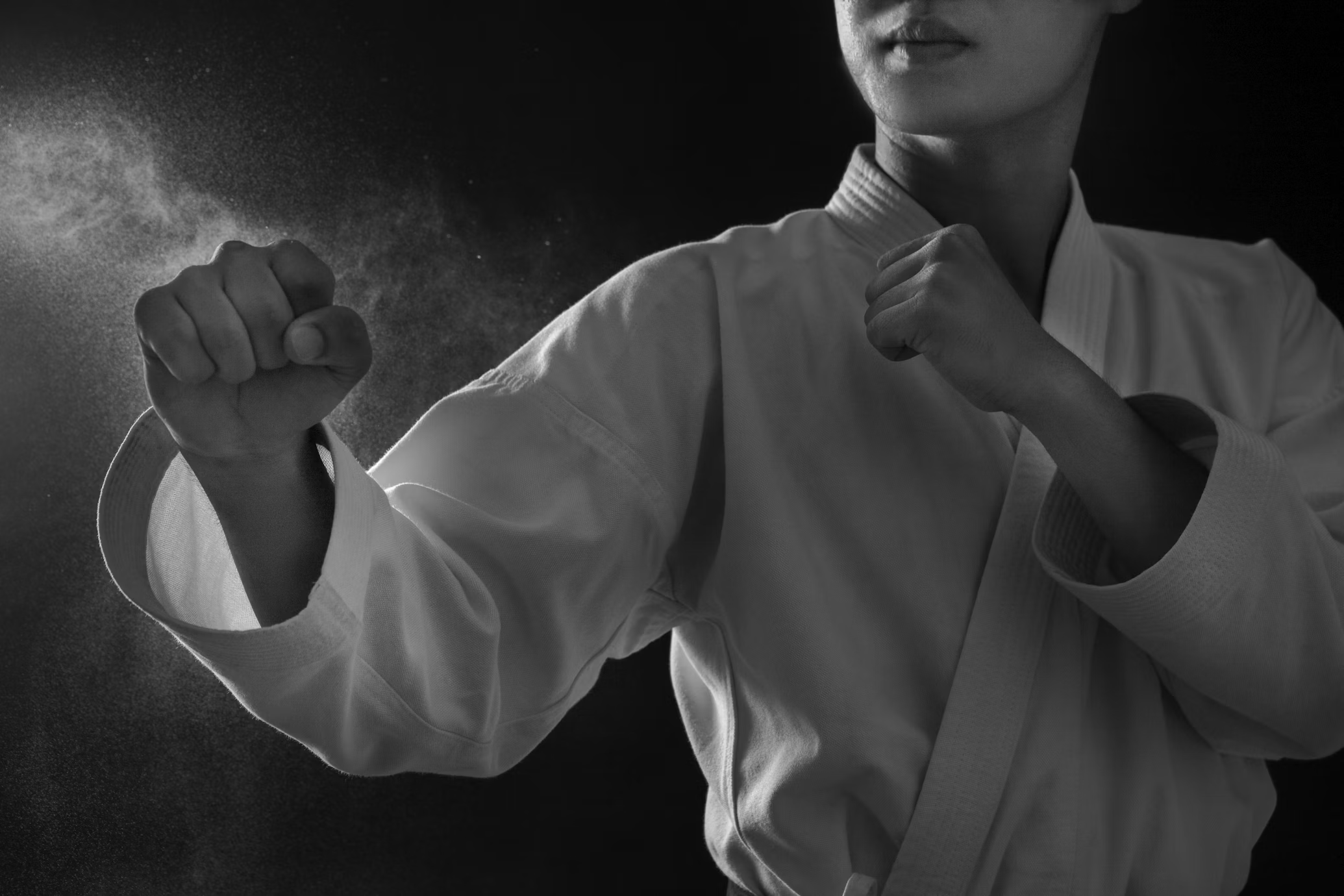
A reflection on male violence and female ‘fragility’ in contact sports
The female body is constantly perceived and socially interpreted as weak. From periods and childbirth to sexual violence, there are countless ways the patriarchy tries to conceptualise the female form as anything but strength.
Women in sports are constantly set aside because of this apparent weaker form – yet it is women that live with their “pain built in,” as Phoebe Waller-bridge describes in Fleabag. Amber Glenn, US figure skating Olympian in the 2026 Winter Games shed light on how even at the height of athleticism, women’s performance is still impacted by periods. It is the irony that is ever prevalent, that women’s endless suffering seems to never be a determining factor in their ambition and capabilities. Although female athletes across the board must challenge these patriarchal narratives, contact sports, especially martial arts, can feel like a true battle of the sexes.
While other sports can reward brute strength, martial arts rely on technique and skill regardless of gender, build, even age; it is a demonstration of experience, discipline and most importantly spirit. Often it will be the case that women in these spaces, where training is gender inclusive, face the ‘consequences’ of training with men. Martial arts, in particular Kendo, has been described as a ‘microcosm of the world’ — for women that includes fighting on equal footing as they are consistently undermined and treated with a lack of consideration, with physical marks as proof. The questions are not about blame, but ascertaining along which lines of thinking and which paths have led to the current state of affairs.
To feel violated in a sport which is primarily designed to hit and be hit is an enlightening realisation — why is it that this contained violence can so quickly shift from fun to fear? Why does this fight that necessitates intimidation from both parties morph into prey versus predator? Ultimately, it is a nuanced discussion, in the binary, about the tunnel vision of men and the hyper-vigilance of women — a simulation of the outside world. There is always a margin for error, but how is it so often the case that there are these repeat offenses of unnecessary injury? The difference in awareness, although there may be no ill intention, is unnerving. It is not a question of skill, but simply how gendered mindsets can prove to be in a fight or flight context. In sports where gender should play a negligible role, it echoes in these halls of screams.
“I’m not a violent dog, I don’t know why I bite,” from Wes Anderson’s Isle of Dogs encapsulates this gap in understanding found in men that are constantly confused by the women they hurt. There has been an intentional conditioning of men to be these violent creatures or do certain acts simply because they can, yet there is no intrinsic violence afforded to any gender at all. Women are just as capable in demonstrating healthy competitive aggression as men, and while ‘male’ violence is not inherent neither is ‘female’ fragility.
Contact sports can be solely competitive or recreational. There are, however, rising numbers of vulnerable individuals using them as both self-defense as well as a way to regain autonomy. As women, children, and other vulnerable people continue to share their experiences of violence and domestic abuse, it becomes increasingly obvious that these are not isolated incidents. While at the edge of violence, contact sports can be incredibly empowering, which is precisely why there must be an even greater effort to safeguard these spaces. The Edinburgh University martial art clubs have been making their support for International Women’s Month obvious, with the Kendo Club running a charity showcase in support of Scottish Women’s Aid. These spaces are and should continue to be, safe spaces in which people can seek to better themselves both mentally and physically.
Photo by Nguyen Hung on Unsplash.